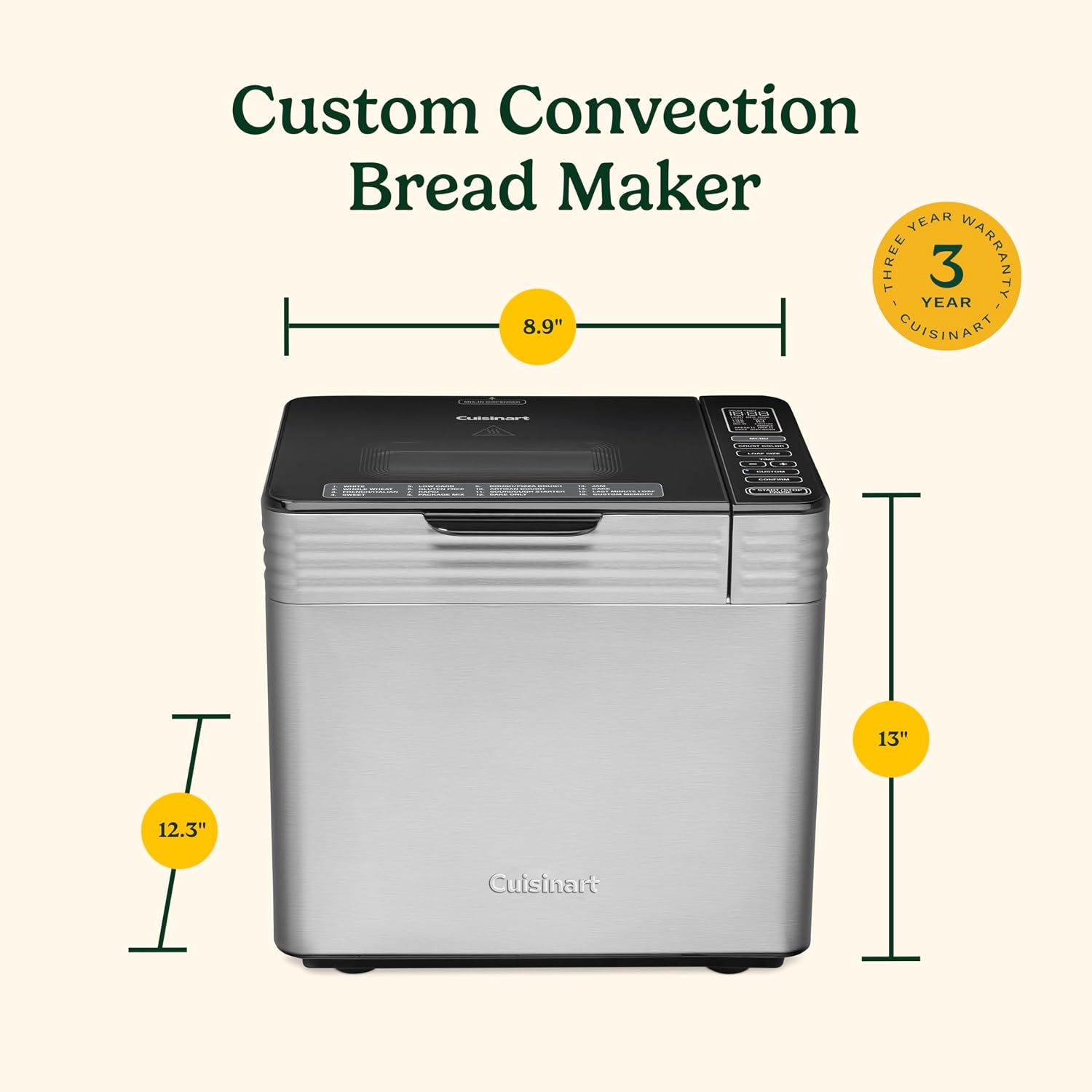
My loaf came out dense and barely rose. What went wrong?
Most often the yeast met the salt before baking started. Add the liquids first, then the flour, then make a small well in the top of the flour and put the yeast in it, keeping the salt at the opposite side of the pan. Salt draws water out of yeast and slows or damages it on direct contact, and with the delay timer the ingredients may sit together for hours before mixing begins. There is also a cause specific to this machine: if no crust colour is selected, it may not default to dark as the manual says, and the loaf can collapse into a dense mass. Pick a crust colour every time.
Why is there a hole in the bottom of my loaf?
That is the kneading paddle, and every bread machine does this. The paddle sits at the bottom of the pan and turns during mixing, and it is still there while the loaf bakes around it, so tipping the bread out leaves a slot where it was, and often the paddle comes out embedded in the loaf. There are two ways to handle it: accept the hole, which is invisible once sliced, or remove the paddle at the end of the final knead before the last rise — a step some bakers swear by, which requires being present at the right moment in the cycle.
Can I use the delay timer for any recipe?
No — do not use it with recipes containing milk, eggs, butter or anything else perishable, since those ingredients would sit at room temperature for hours before baking begins. The delay timer is safe for straightforward flour, water, yeast and salt recipes where nothing in the pan needs refrigeration, but perishable ingredients need the machine to start mixing immediately rather than waiting.
Should I use bread flour or all-purpose flour?
Bread flour makes a noticeably better loaf. It has a higher protein content than all-purpose, which means more gluten — the structure that traps the gas the yeast produces and gives bread its rise and chew. All-purpose flour still makes an acceptable loaf, so it is not a requirement, but if a loaf consistently comes out flatter or denser than expected, switching to bread flour is one of the simplest fixes to try before assuming a machine fault.
Why does my dough look wrong partway through kneading?
Check it through the lid during the kneading cycle rather than waiting for the finished loaf — the machine cannot see or feel the dough, so it cannot compensate for a humid day or a cold kitchen on its own. The dough should form a smooth ball that cleans the sides of the pan. If it looks too sticky, add flour a spoonful at a time; if it looks too dry and crumbly, add water the same way. Two minutes of attention at this stage is worth more than any programme setting.
Which model number should I use when ordering a spare pan or paddle?
Use the number printed on your own unit. Cuisinart sells this machine as the CBK-110NAS and also lists it as the CBK-110P1ES, and the pan and paddle are the parts most likely to wear out and need buying, so using the wrong model number when ordering a spare part risks getting one that does not fit.