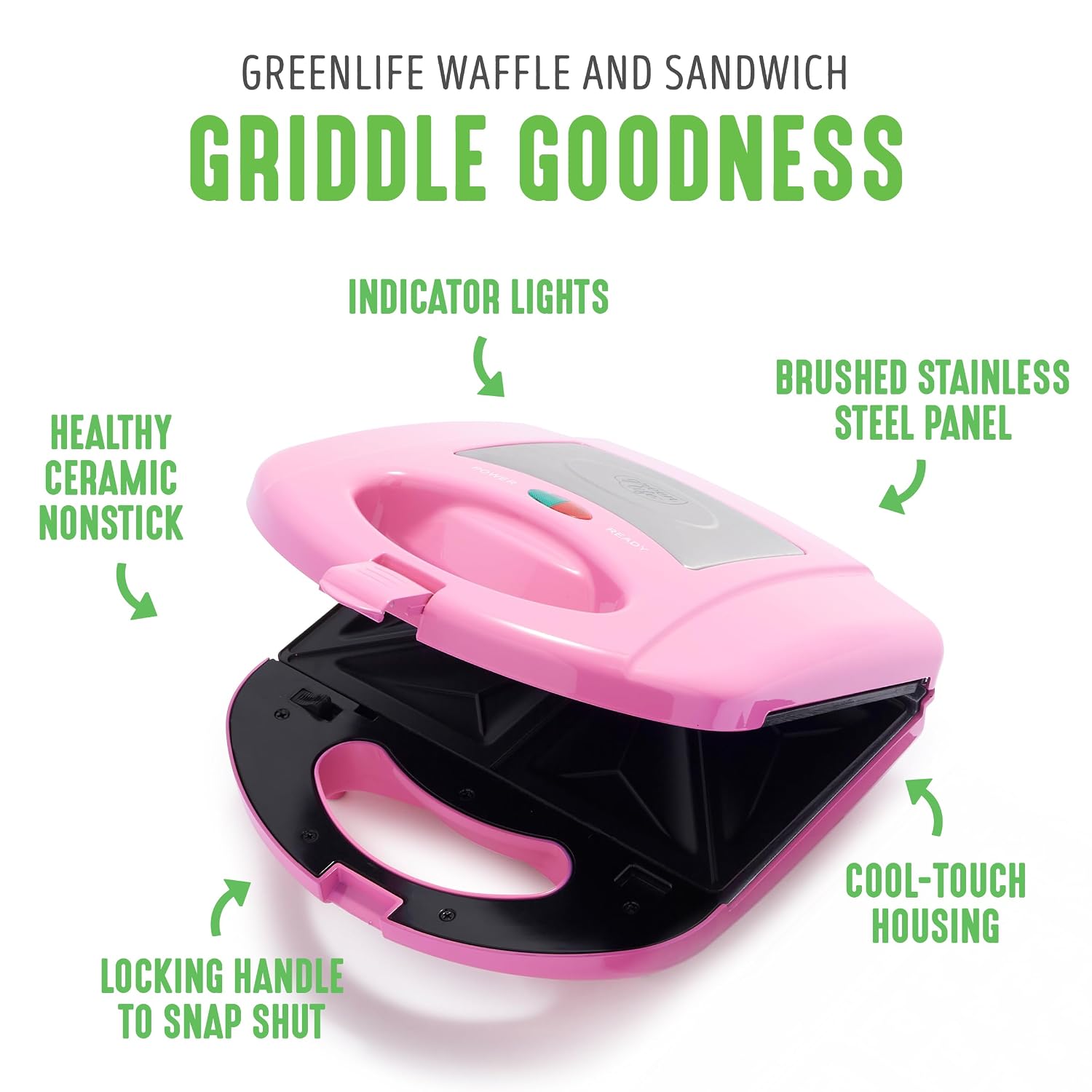
Is this actually a good waffle maker?
Only partly. Its waffles are uneven, and they often do not come out crisp. Even at its best, waffles take about 4 minutes, or a few more rounds than expected, and its biggest fans rate the sandwich side far above the waffles. If waffles are your priority, this is not a reliably excellent choice.
Why is it so divisive?
Because it does some jobs better than others. Durability and heating are weak, and quality, reliability, waffle results and value are inconsistent, while for sandwiches, quesadillas and quick snacks it is a delight. Test your unit thoroughly while you can still return it rather than assuming reliable performance.
How durable is it long-term?
Durability is one of its two weakest areas, alongside heating performance, so treat it as a real concern and test the machine early while you can still return it.
Is it worth the low price?
It depends on the job. For sandwiches, the low cost and PFAS-free ceramic plates make it good value even with uneven waffles; if you want it mainly for waffles, the weak durability and heating make it harder to justify. Weigh which job you want it for before buying.
Is the ceramic coating actually PFAS-free and safe?
GreenLife says the ceramic coating is derived from sand and free of PFAS, PFOA, lead and cadmium, and that curing it produces 60 percent less CO2 than curing traditional nonstick coatings. If a PFAS-free cooking surface is why you are buying, the coating delivers on that.
How does the indicator light work?
GreenLife fits a green indicator light that tells you the machine is ready; use it as the cue to add the batter or sandwich. It shows the plates are hot, not that food is done, so given how uneven the waffles can be, check your first batches by eye.