How long does a '5 minute' recipe actually take?
Longer than five minutes, and it helps to know why before your first cook. Before the timer starts counting, the pot must build pressure, which takes longer the more cold liquid and food is inside. Afterwards, pressure has to come down, either quickly using the steam switch or naturally as the pot cools, which takes longer again. It is still far faster than simmering on the hob and entirely unattended, but judge a recipe by its total time, not the number you type in.
My Instant Pot will not come to pressure. What is wrong?
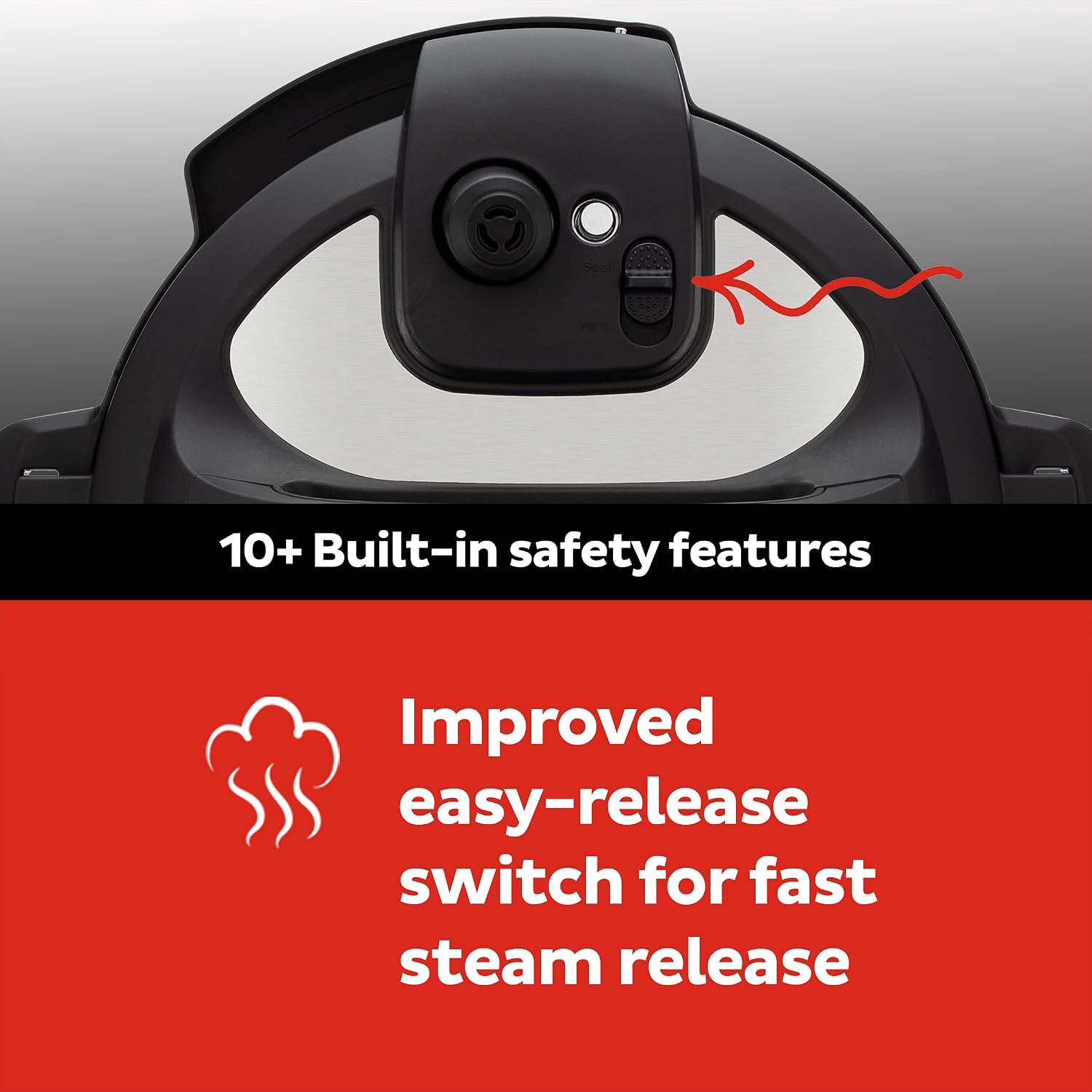
Almost always the sealing ring or the steam switch, and there are a few things to check before concluding anything is broken. The ring may not be pushed fully into place all the way round after washing; it may have stretched and no longer sit tight; or the steam switch may be set to venting rather than sealing. A ring that was not put back properly after washing is the most common cause. A pot that hisses steadily from the lid edge and never seals is telling you about its gasket, not its heating element.
Should I use quick release or natural release?
It depends on what is inside, and it is not arbitrary. Meat and pulses generally do better with a natural release, because a sudden drop in pressure can toughen meat and split beans. Vegetables and delicate foods suit a quick release so they stop cooking straight away. Using the wrong one is a common reason a recipe comes out worse than expected. When you quick release, keep the pot clear of walls and cupboards and your hands away from the steam.
What are the safety rules I should not break?
Two are absolute. Never try to force the lid open while there is pressure inside. And never overfill: the pot should be no more than two-thirds full under pressure, and less than that for foods that foam, such as beans, pasta, rice and oats, because froth can block the steam release. Instant Pot builds in over 10 safety mechanisms, including overheat protection and a lid lock, but they are a backstop, not a substitute for filling it correctly.
Why are there two spare sealing rings in the box?
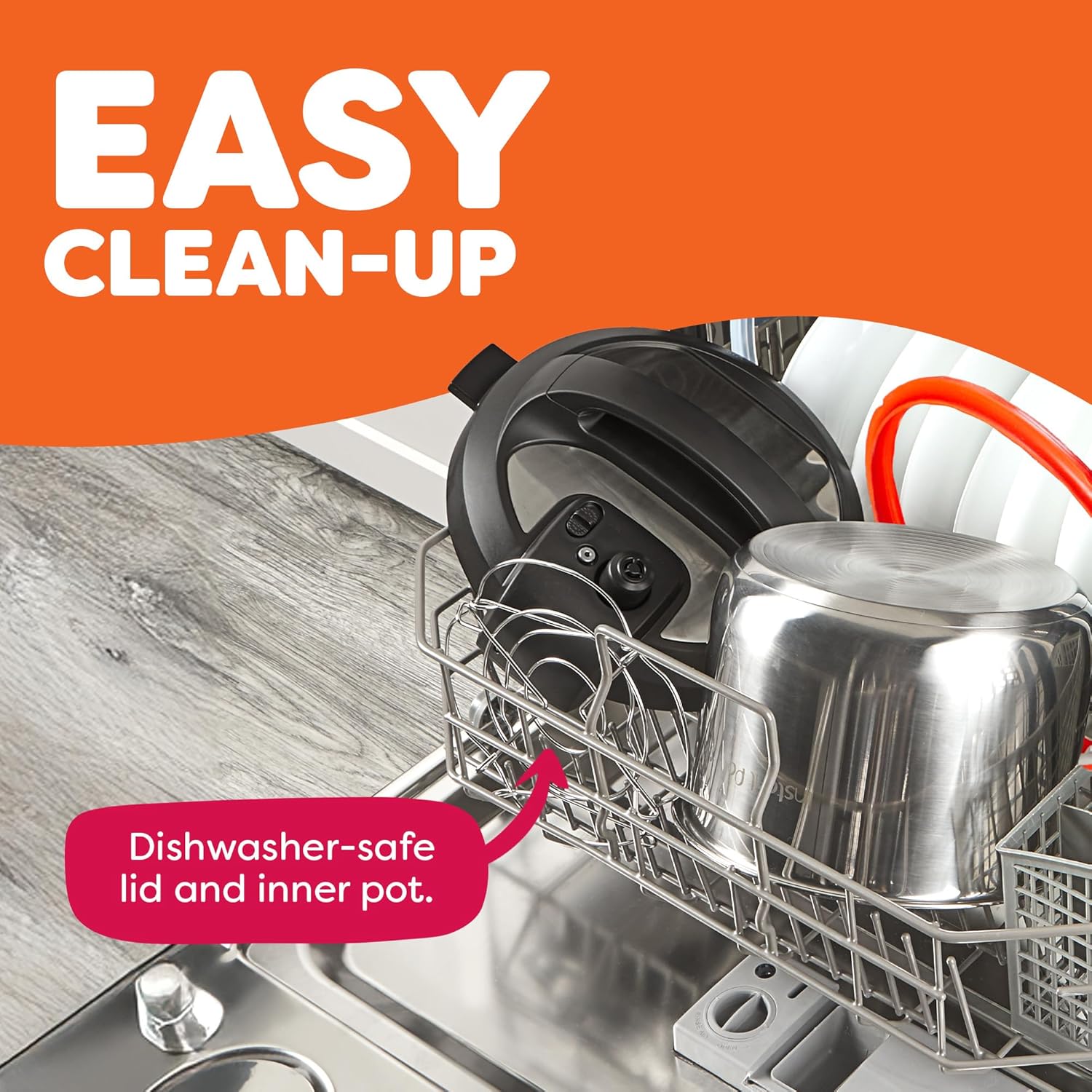
Because silicone absorbs odours. The lid can still smell of a savoury meal after washing, so keeping one ring for savoury cooking and another for sweet or neutral dishes such as rice and yogurt, and swapping between them, keeps flavours apart. Rings are also consumable: they harden and stretch with repeated use, and replacing one when it stops sealing reliably keeps the appliance working.
Is the sous vide function any good?
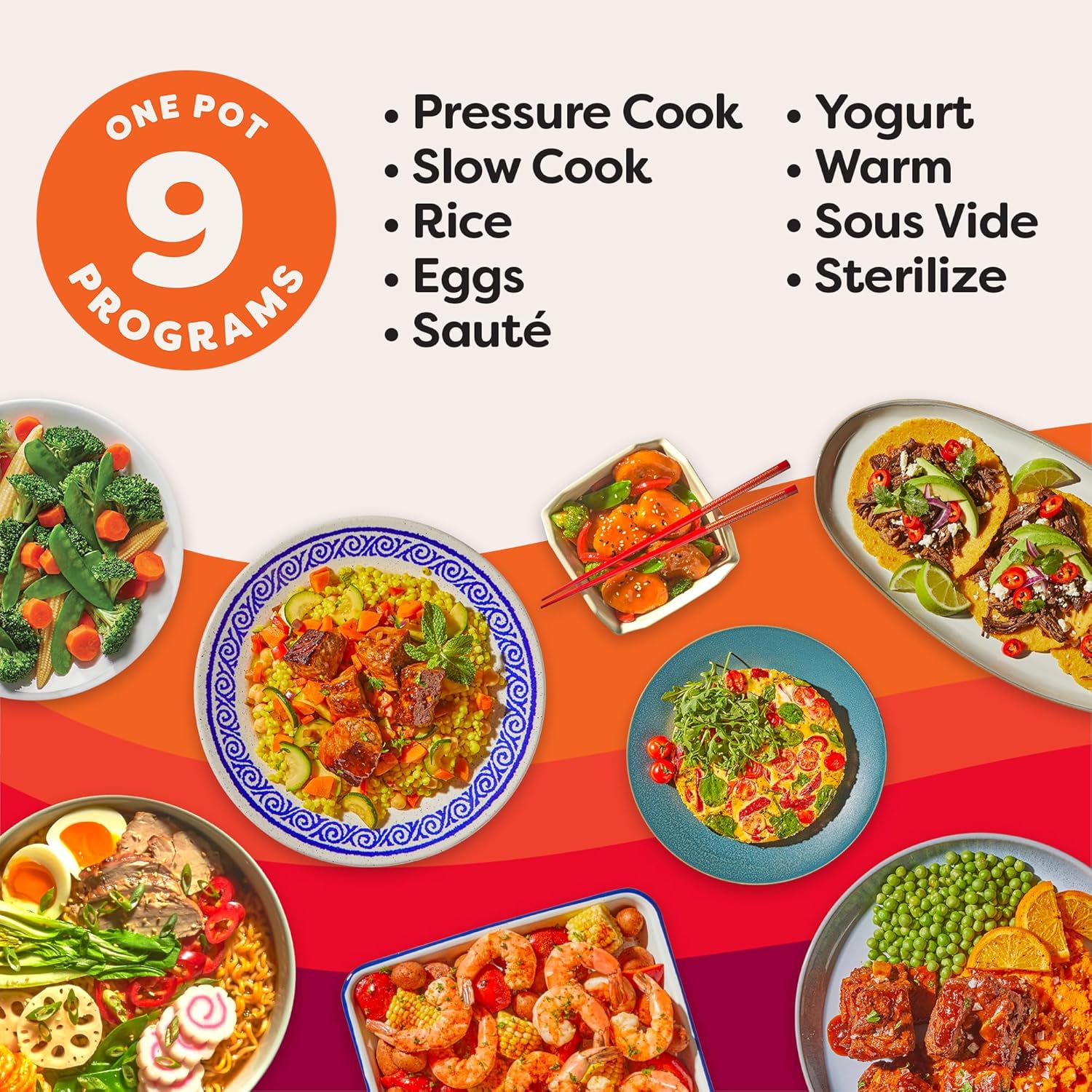
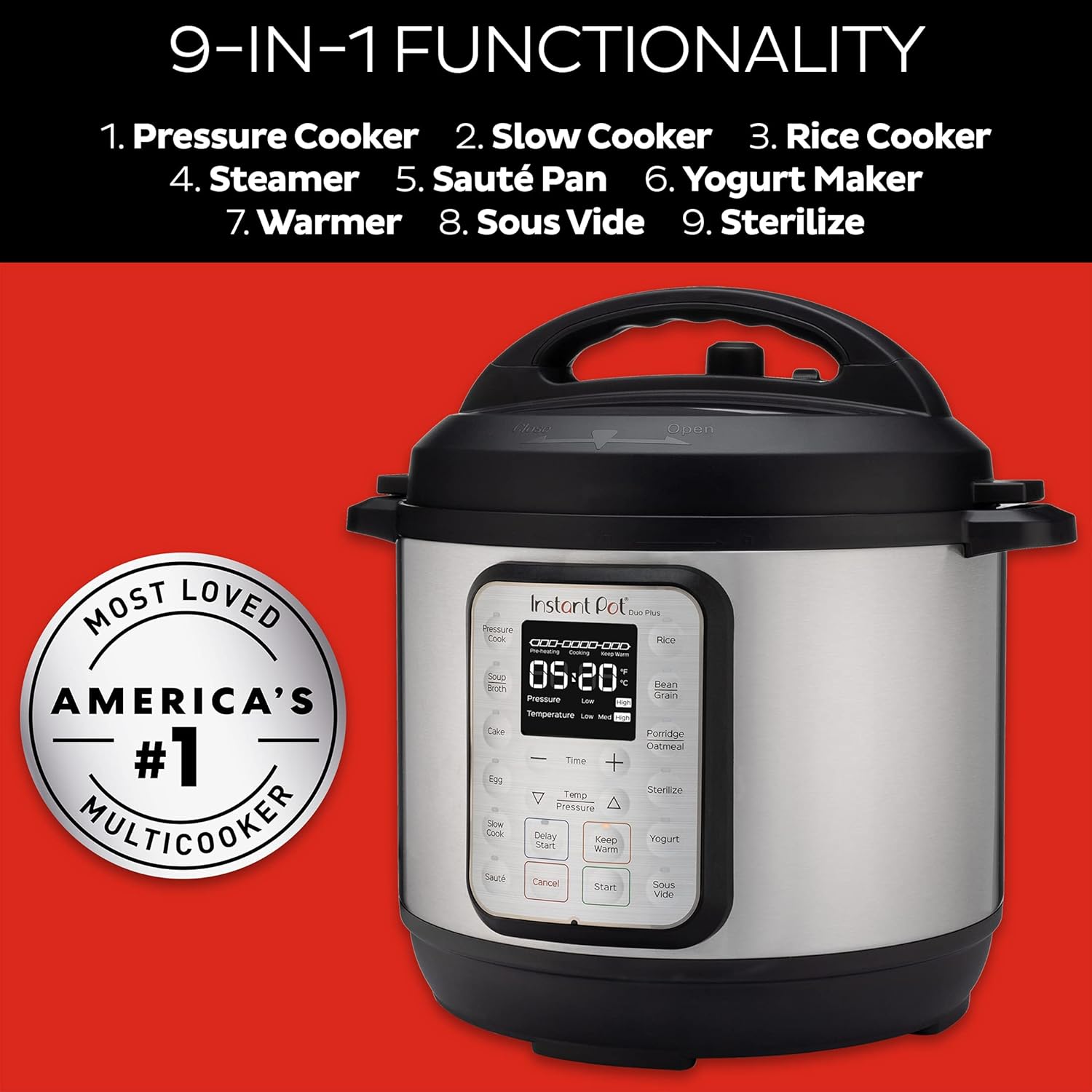
Treat it as a bonus rather than a reason to buy. Its real strengths are pressure cooking, speed and easy cleaning, and sous vide is one of nine functions rather than the point of the machine. The functions that earn regular use beyond pressure cooking are rice, steaming, slow cooking and yogurt, which needs a long incubation you have to plan for. Sterilize is useful for baby bottles and preserving jars.