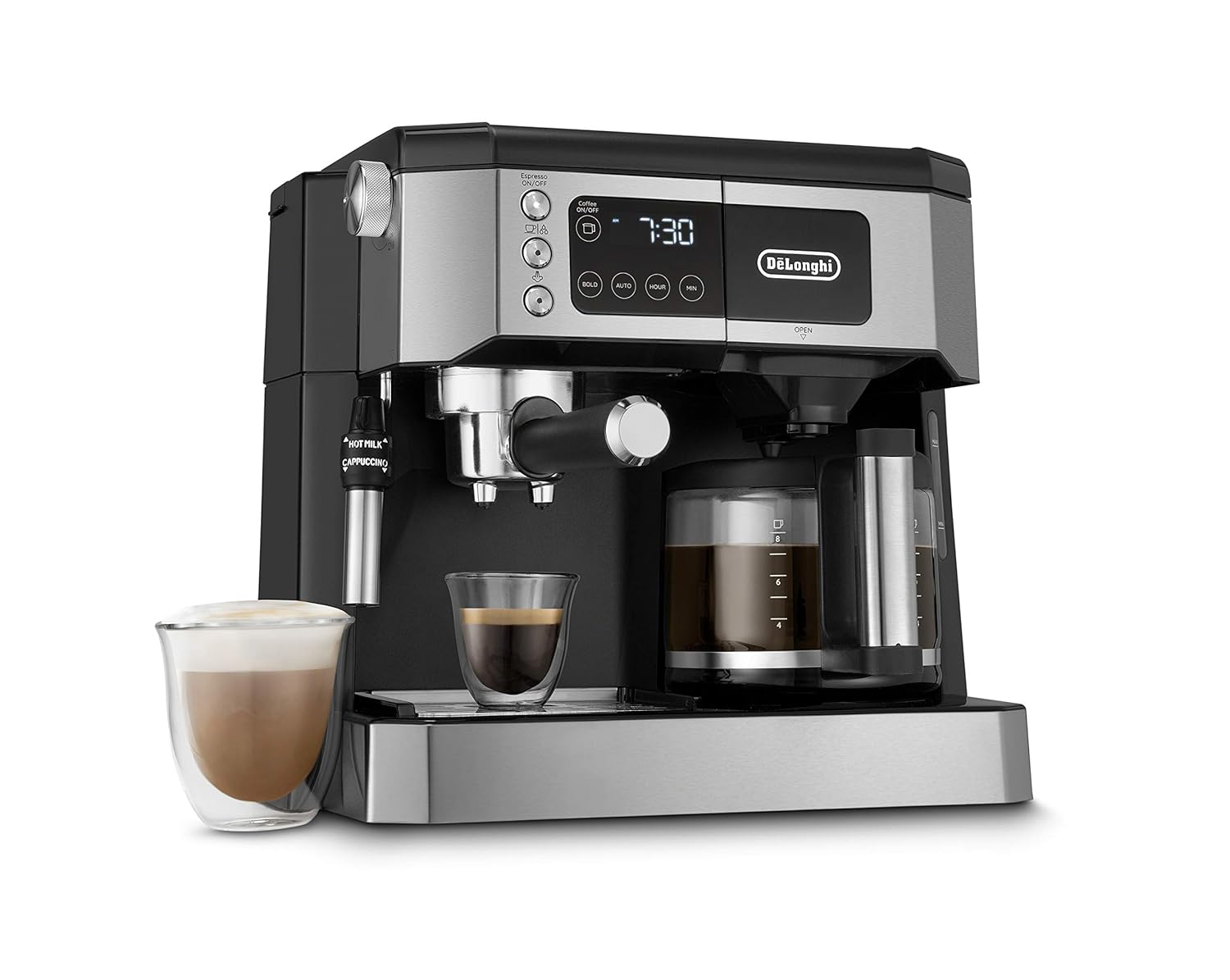
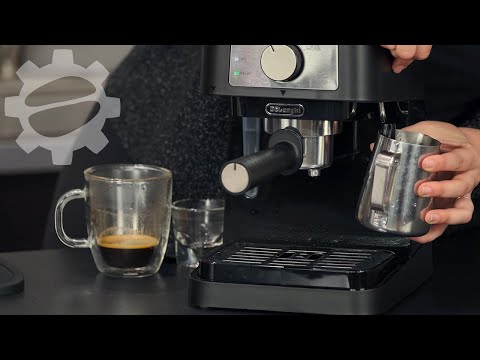
Does it have a boiler or a thermoblock?
A boiler. De'Longhi specifies a stainless steel boiler, and it is a genuinely different heating system from a thermoblock. A boiler heats and holds a reservoir of water at temperature, which generally gives more thermal stability across a shot and better steam performance for frothing, at the cost of a slightly longer initial warm-up than a thermoblock heating water on demand. Owners still describe the Stilosa as quick to heat.
Mine is leaking around the portafilter. What should I check?
Leakage is a known weak point on this machine, and two things account for most cases. Check the portafilter is locked in firmly and evenly every time, since an uneven seal is a common and preventable cause of leaking at the group head, and an aftermarket portafilter may not fit as snugly as the original. And descale regularly with a solution made for espresso machines; De'Longhi recommends doing it roughly every 200 cups. If it keeps leaking, contact De'Longhi: one owner whose machine leaked badly was sent a replacement.
Does the portafilter use pressurized dual-wall baskets, like some beginner machines?
Yes, the baskets are pressurized, though one owner describes a spring-loaded piston in the basket rather than the single small hole many entry machines use. The 51mm portafilter takes a single and a double basket. Pressurized baskets are forgiving while you learn, but several owners who wanted better espresso switched to a non-pressurized basket or a bottomless portafilter.
How long does it take to heat up and brew?
It heats up quickly: one owner puts it at a little over a minute on cold mornings, and another says it heats up in seconds and steams milk in a couple of minutes. Brew time itself varies more, since getting a genuinely good, consistent result takes practice on a fully manual machine, which affects how long the whole process feels even once the machine itself is ready.
Is the milk frother automatic?
No, it is a manual steam wand that you position and control yourself. The quality of the milk texture depends on your technique, the same way shot quality depends on your grind and tamp on this fully manual machine. Owners pass on De'Longhi's advice to release a little steam before and after frothing, and one owner who thought the milk wasn't heating properly found they had not been turning the side steam dial on.
Is it durable enough to be worth the price over a cheaper machine?
The evidence leans positive overall: durability and reliability are both inconsistent from unit to unit, yet one long-term owner describes the machine still pulling perfect shots after nearly four years. Value for money is one of the most consistently praised aspects, and the honest read is that maintaining it properly, with regular descaling and a firmly seated portafilter, matters more to its lifespan than most buyers expect.