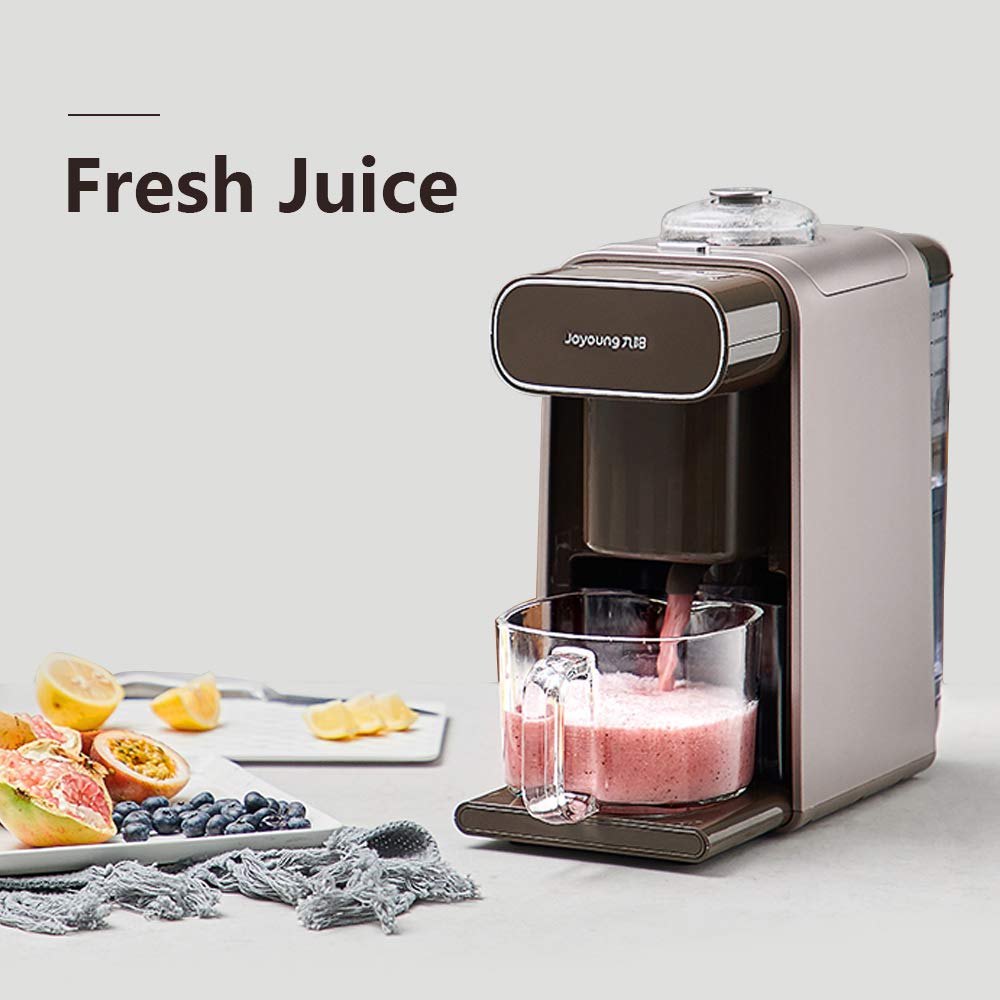
Joyoung says 'no filter', but a reusable filter comes in the box. Which is it?
Both are accurate and describe two different functions. The 'no filter' claim covers soy milk: the machine grinds whole soybeans at high speed and cooks the mixture directly, so there's no pulp to strain afterward. The reusable filter in the box belongs to the separate drip-coffee function, which brews from ground coffee. If you only use this for soy milk or nut beverages, you'll likely never touch the filter; if you use the coffee mode, you will, and being reusable, you won't need paper filters.
How well does the self-cleaning feature actually work?
Very well; self-cleaning and ease of use are its clearest strengths. For anyone upgrading from a machine they disliked washing, it is the reason to switch, and not having to touch the blade to clean it can be the best part of ownership. The cycle runs an automatic rinse, steam, and blade wash, and a separate water and dispensing system is meant to reduce residue buildup over time. A few specks of coffee grounds can be left after the coffee program. It's one of the machine's best features, though it covers cleaning specifically, not reliability, which is mixed.
What serving sizes can I make, and how does the preset timer work?
The DJ10U-K1 offers four adjustable serving sizes — 300, 500, 800, and 1000 mL — handling a single-cup portion or a full 1-liter batch in the same glass pot. A preset timer lets you schedule a run anywhere from 3 to 12 hours ahead, meant for setting up a batch overnight so it's ready by morning rather than starting fresh each day. Combined with the touch-pad interface and fully automatic operation mode, the sizing and scheduling controls fit into a daily routine without much manual babysitting.
Is the coffee function actually good, or is it just a bonus feature?
Treat the coffee function as a bonus rather than the main reason to buy this machine. It is a real drip-style setup taking ground coffee, but the grind can come out inconsistent and the water may not be hot enough, which can leave the cup sour and weak while using more coffee than a normal machine would. It clearly trails the soy milk function this machine is built around. If coffee quality is a priority, this shouldn't be the deciding feature.
Can this machine make hot water for tea, and how hot does it actually get?
It can produce hot water, but with real limits: the hot water setting is fixed at 500 mL, and it can top out around 82°C, short of the roughly 90°C many hot-water uses call for. That may make it fine for yerba mate, which tolerates the lower temperature, and disappointing for most other hot drinks. If hot water for tea is a primary use case, this machine's kettle function may fall short, even though soy milk, its primary function, is much stronger.
Given the mixed reviews on durability and value, is the DJ10U-K1 worth the money?
It is a good fit for a specific buyer, not a universal recommendation. Most owners are happy, but a meaningful minority are not; durability is its weakest point, and reliability and value for money are mixed. The strongest case is an upgrade from a machine you disliked cleaning, where the self-cleaning cycle is worth the jump. If your priority is soy milk and grain drinks with minimal cleanup, it delivers; if you expect equally strong performance and durability across coffee, hot water, and every function, temper those expectations.