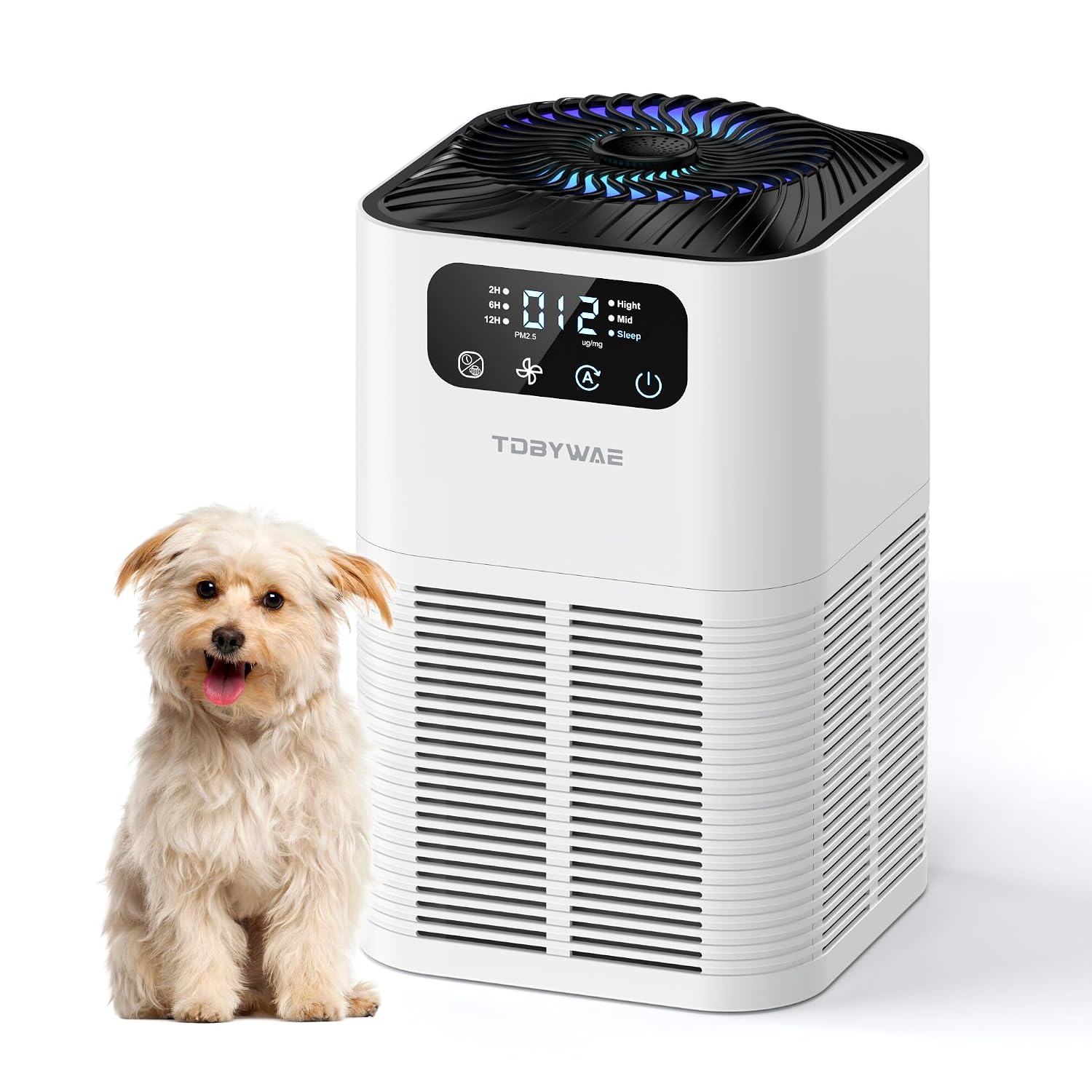
How loud is this purifier really?
Quiet enough for a bedroom. TDBYWAE rates it at a whisper-quiet 25 dB thanks to a brushless motor, and in use sleep mode is barely audible overnight, while even the high setting can run at a shared workstation without disturbing anyone. The unit draws just 7.5 watts, consistent with a low-power brushless design.
How big a room can it handle?
TDBYWAE rates it for up to 1,076 square feet, but the more useful figure is the one it gives alongside: 4 air changes per hour in a 269-square-foot room. That is the kind of turnover allergy sufferers usually want, so think of it as a bedroom or home office purifier that can take the edge off a larger space, rather than a large-room machine. Buyers agree, finding it most effective in small spaces and bedrooms.
Can the filters be washed?
No. TDBYWAE says the HEPA and activated carbon layers are disposable and shouldn't be washed, though you can brush dust off the surface. When the unit has run for 1,440 hours, the timer button flashes red to remind you to replace the filter, and TDBYWAE recommends its own replacement filters. Budget for them: replacement filters are the main ongoing cost, and no spare comes in the box. Before first use, take the new filter out of its plastic bag, and note that the power cord is stored under the base cover.
Is this a genuine HEPA filter or just 'HEPA-type'?
It's a true H13 HEPA filter, a recognized grade rather than the vaguer 'HEPA-type' language some budget purifiers use. TDBYWAE credits it with capturing particles down to 0.3 microns, with a pre-filter ahead of the HEPA layer to catch larger debris first and an activated carbon layer for odors. Cleaning performance and air quality are real strengths in use, with reduced dust and relief from allergy or rhinitis symptoms after regular running.
Does the aromatherapy pad interfere with air purification?
No. The aromatherapy element is a separate cotton pad sitting on top of the unit, meant for 4-5 drops of your own essential oil, and it isn't part of the H13 HEPA filtration path. It's a scent add-on, not a filtration stage, so using it (or skipping it entirely) shouldn't change how effectively the pre-filter and HEPA layer capture dust, pet dander, or odor particles. If you'd rather run the purifier unscented, you can simply leave the pad empty; the unit's core filtration and its PM2.5 monitoring chip operate independently of whether the diffuser pad has oil on it or not.
Does it help with allergies and pet dander?
Allergies are where it earns its keep. It can ease year-round rhinitis at a workstation and cut down on sneezing mornings through pollen season, and run overnight in a child's bedroom it can ease spring and autumn allergy symptoms noticeably. On pets, continuous running visibly cuts down floating fur from long-haired cats on tables and floors. Air quality and cleaning performance are its clear strengths, which fits those results.