Is this an H13 or H14 HEPA filter?
Buy it expecting H13. Tailulu puts H14 in the product name, but describes the main filter as a true H13 HEPA that blocks 99.99 percent of dust, pollen and allergens, with a particle retention size of 0.1 micron. True H13 is a strong grade for a home purifier, and the carbon and pre-filter stages handle odors and pet hair on top of that.
How often does the filter need replacing?
Tailulu suggests every 3 to 6 months depending on your air quality, and a filter replacement indicator lights up when it is time. In a home with pets, smokers or wildfire smoke, expect to be nearer the shorter end, since a busier filter clogs sooner.
Does it adjust itself to the air quality?
Yes. A PM2.5 sensor reads the air and shows the level in real time on the display, and in Smart Auto mode the purifier raises the fan speed when pollution rises and drops it when the air is clean. The monitoring is a genuine strength, and the display is useful for seeing when the purifier is working harder, which helps when managing a child's asthma.
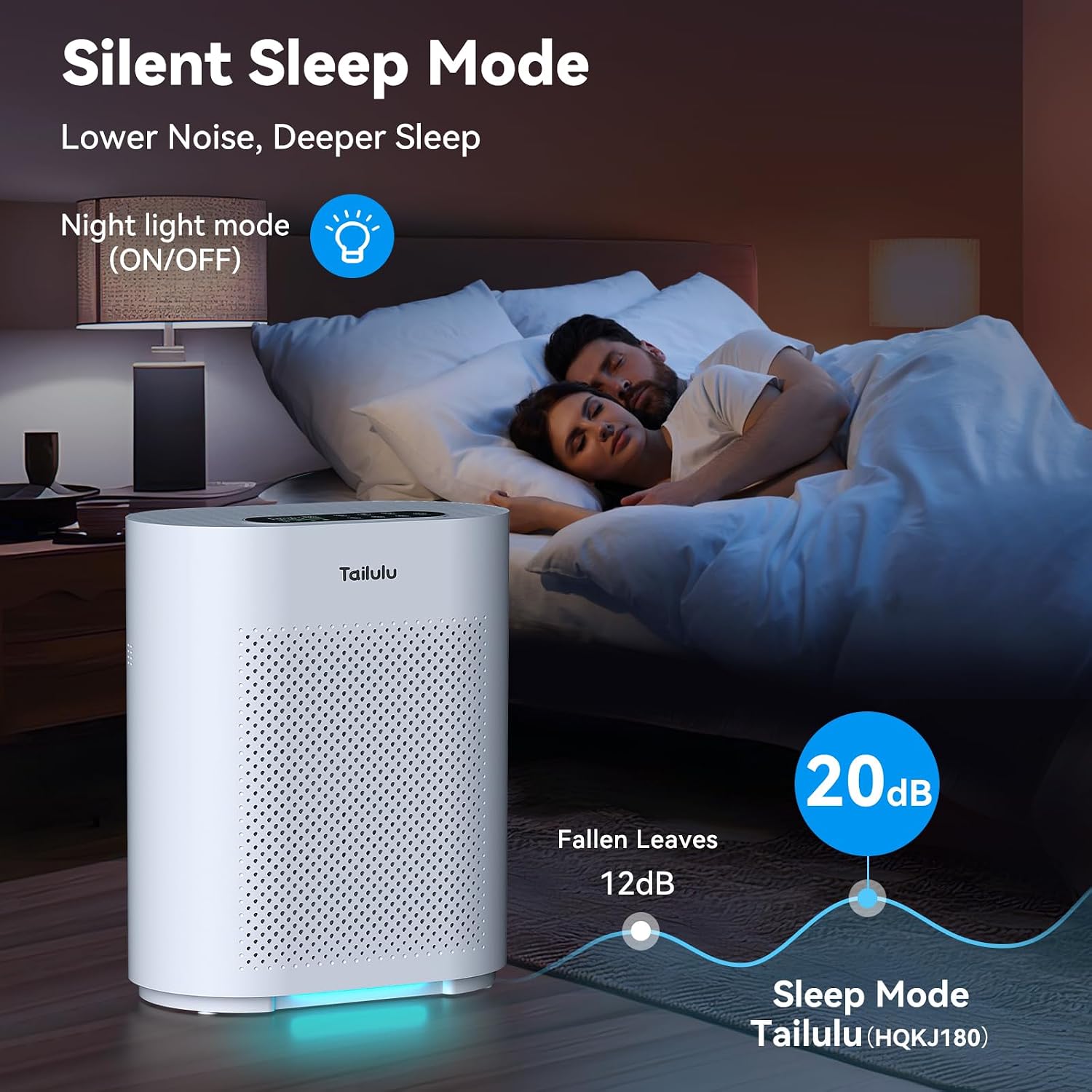
Is it actually quiet enough for a bedroom?
In sleep mode, yes. Tailulu rates sleep mode at a near-silent 20dB and adds an optional soft-glow night light it says won't disturb sleep. At higher fan speeds it is less predictable: it can sound like quiet background noise, or the fan can be noisy or even intrusive. Run it on sleep mode overnight and save the higher speeds for when you're out of the room.
Will it clear my house of cigarette or wildfire smoke completely?
It helps meaningfully but has limits. It improves general air quality but won't clear a room of active smokers. It can see a family with an asthmatic child through allergy season and summer wildfire smoke, which suggests it suits steady, ongoing air cleaning better than clearing heavy smoke fast. Smoke odor is the job of the activated carbon layer, which Tailulu says also removes VOCs such as formaldehyde.
Is it good for a large space like a classroom or open living area?
Tailulu rates it for spaces up to 2,200 square feet. In a classroom where the door has to stay closed and the vents are blocked, it can noticeably clean up musty air. For a big open-plan area, treat 2,200 square feet as the ceiling: it will clean a single closed room faster than a whole open floor.