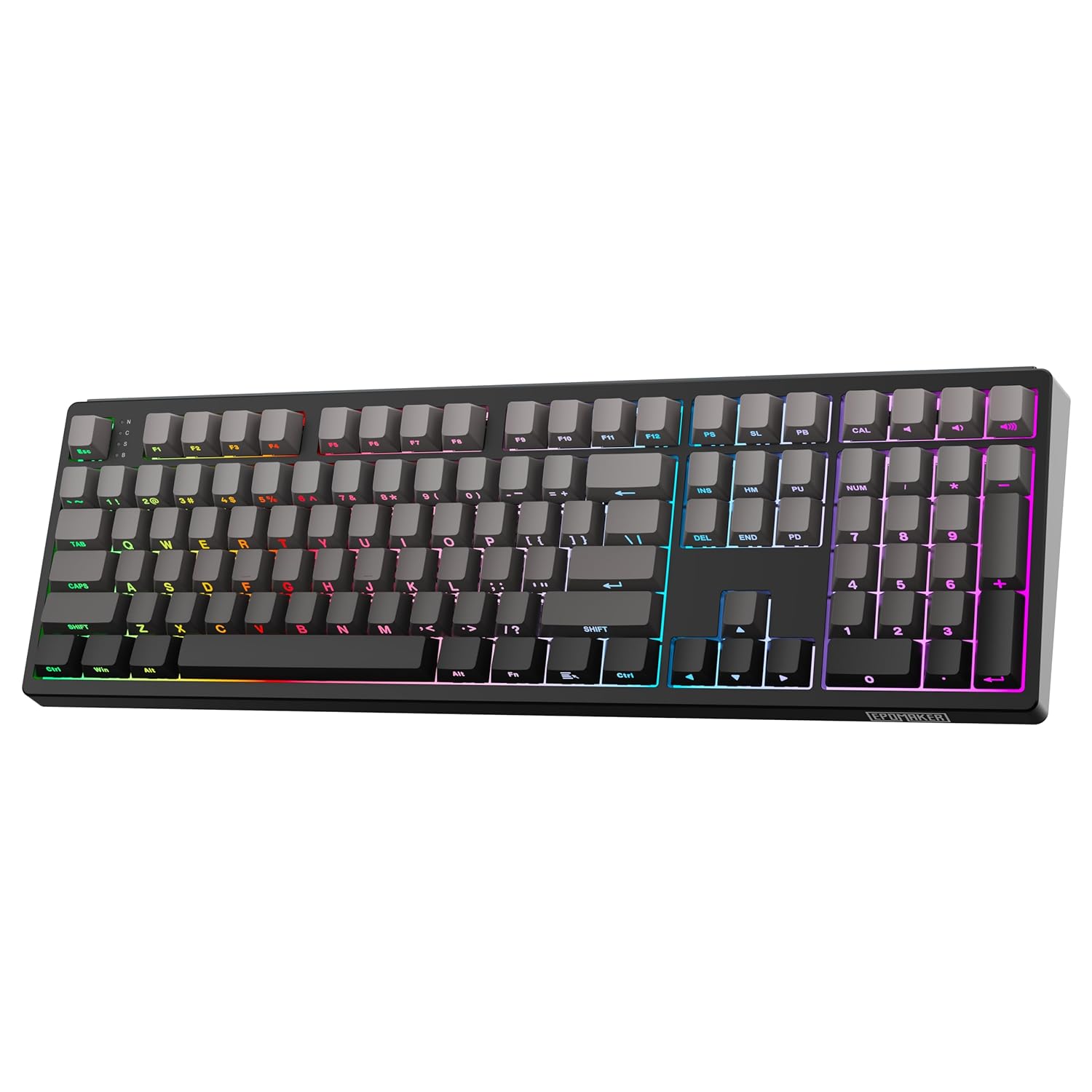
Does the Keychron V5 8K's RGB lighting shine through the keycaps?
No - the double-shot PBT keycaps are opaque, so the RGB LEDs glow around the keys rather than through the printed legends. This can make the keys hard to read in dim rooms and effectively unreadable in full darkness, which sits awkwardly next to the backlit marketing. If legible glowing legends matter for low-light typing, this is worth weighing before buying, since the lighting here is more ambient under-glow than functional illumination.
What processor do I need to get the full 8000 Hz polling rate?
Keychron specifies at least an Intel i7 9th Gen or AMD Ryzen 7 2nd Gen processor to sustain the full 8000 Hz rate in wired mode. On older or lower-powered systems the keyboard still functions normally, just without guaranteeing the full polling benefit. It's worth checking your system specs before buying if ultra-low latency at 8K is the main reason for the purchase.
Can I swap out the stock tactile Banana switch for a different switch?
Yes - the PCB is hot-swappable and accepts both 3-pin and 5-pin mechanical switches without soldering. No switches beyond the stock Banana switch are specified as included.
Does the Keychron Launcher software work on Linux?
Yes - the Launcher is a browser-based web configurator, so it works across Windows, macOS and Linux without installing anything. It can work out on Linux, though the website address is not clearly documented, so it may take some searching to find on first setup.
Is the V5 8K a full-size keyboard or does it skip keys?
It's a 96% layout, which keeps the full numpad, function row and navigation cluster found on a full-size board but tightens the spacing between those key groups to reduce the overall width.
Does this keyboard work with OpenRGB or other open-source lighting control software?
This is not stated as supported, and its absence can be a drawback for Linux users who prefer system-level, open-source control over a browser-based configurator. Lighting customization instead runs through Keychron's own browser-based Launcher configurator, which does work on Linux but is a separate, proprietary tool rather than an open-source one.