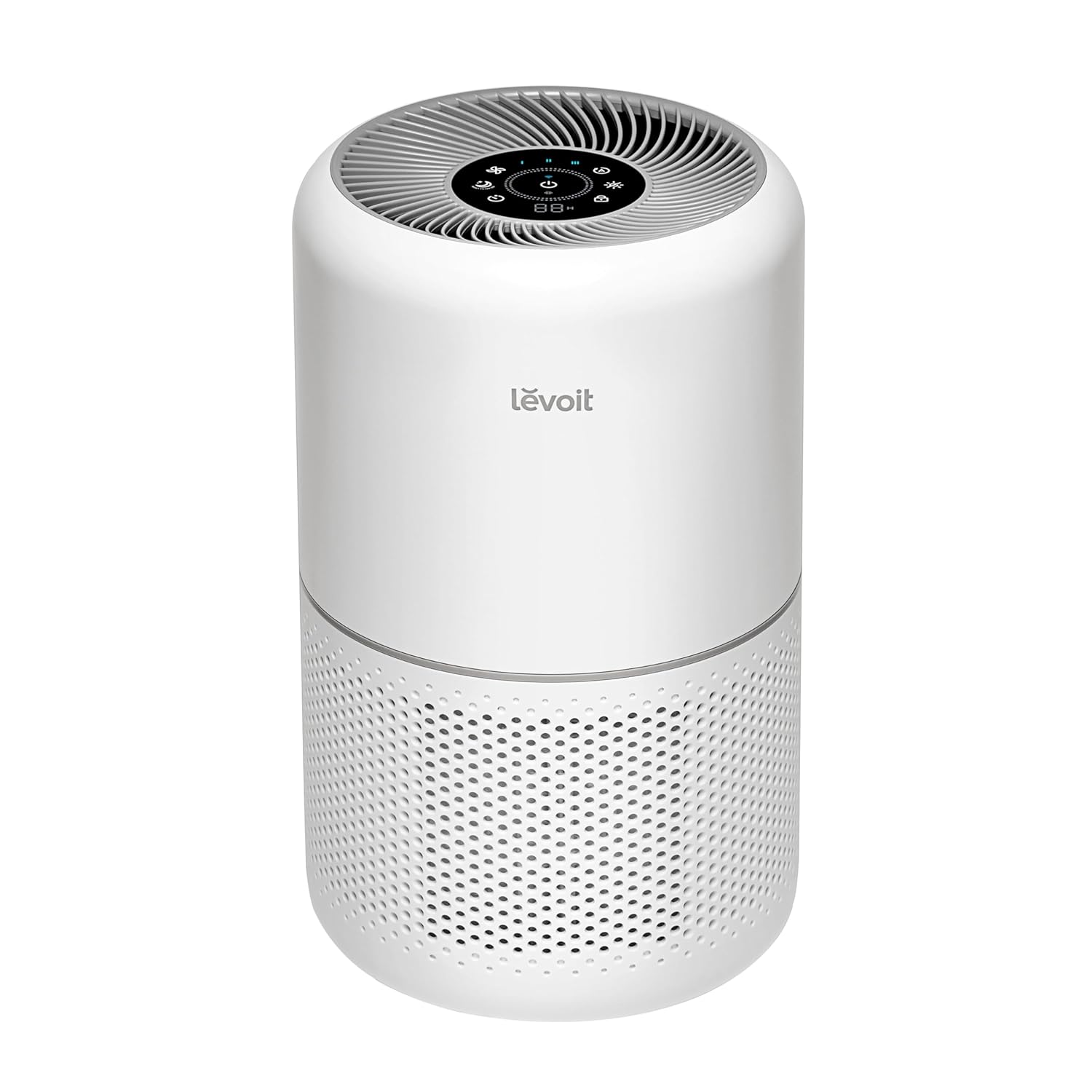
What size room is the Core 300-P actually right for?
The usual guidance for matching a purifier to a room is the two-thirds rule: the CADR should be at least two-thirds of the room's floor area in square feet, for a standard eight-foot ceiling, to get four to five air changes an hour. Applied to the 143 CFM smoke rating, that points to a room of roughly 215 square feet: a normal bedroom, a study or a nursery. The 1,073 square foot headline and that figure are not in conflict; they answer different questions, one assuming a single air change an hour and the other assuming enough to keep up as pollution is generated.
Does it emit ozone?
Levoit lists it as CARB compliant for California indoor air quality standards, and California's Air Resources Board certification for air cleaners exists to keep ozone emissions in check. This matters because a significant number of cheaper 'ionising' or 'plasma' purifiers work partly by generating ozone, which is a lung irritant. The Core 300-P is a filter-and-fan machine: a 56W motor pulling air through a 3-in-1 filter.
Does the Core 300-P have an air quality sensor or auto mode?
No. There is no air quality sensor and no automatic mode, and the control method is a simple touch panel: it runs at whatever speed you last set it to. More expensive purifiers sample the air and raise the fan by themselves when they detect a spike from cooking or smoke. For most people that is a fair trade at this level, and the built-in 2, 4, 6 or 8 hour timer plus a habit covers it, but if you specifically want a machine that responds on its own to burnt toast or a wildfire day, this is not that machine.
How should I actually run it day to day?
A pattern that works well: high for an hour or two when you first come into a room, when cooking, or during pollen season, then Sleep Mode with the 6 or 8-hour timer overnight to hold the position. Running it on high continuously is loud and wears the filter faster; running it only on Sleep Mode means it never catches up after a spike.
What does it cost to keep running?
Filters are the real cost of ownership rather than electricity, since the machine draws a maximum of 56 watts. Levoit warns against off-brand replacements, which is partly commercial and partly real: a filter that does not seat exactly lets air bypass the medium, and a purifier leaking unfiltered air around its own filter does little however good the medium is. The official replacements are reasonably priced, swap in under a minute, and can last around six to eight months, depending on how hard the machine runs.
Is 24 decibels quiet enough to sleep next to?
Yes. Twenty-four decibels is around the level of a whisper or rustling leaves, and below the background hum of most bedrooms at night; a central heating or cooling system is usually louder. That figure applies to Sleep Mode specifically; at full fan speed the machine is clearly audible, which is the trade for moving enough air to clear a room quickly.